Choosing a word of the year to transform a lifetime.
It’s me, Linds 🙂
We have the power to change ourselves. We don’t have to be the way that we are. Is it hard? Yes. Does it take time? A lifetime. Can we do it all on our own? Certainly not. Just because we cannot do it all at once and all on our own doesn’t mean we cannot make real, incremental changes. We can always start.
If you’re like me, starting is the hardest part. We get comfortable with our status quo. We find security in how we currently imagine ourselves, I’m a procrastinator; I’m an endearingly messy person; I have a lot of anxiety, which conveniently excuses us from transforming ourselves. Starting means ridding ourselves—at times—of what feels like part of our identity. But what if our identity is the thing holding us back? We cling to it because it is comfortable; and yet, comfort is the enemy of growth.
My advice? Ease in slowly. If lofty New Year’s Resolutions feel daunting and only end in disappointment, well, aim lower. It’s easy to see when we’ve failed at accomplishing a concrete goal, and that shame often serves to reinforce all the negative pieces of our identities. It quickly becomes a flogging cycle. How to break free? Lower your expectations. Pursue something smaller and less measurable than a concrete action or goal. Seek openness and curiosity and flow instead of ends. Start with a word instead.
In lieu of lofty resolutions and subsequent shame cycles, I choose a modest “word of the year.” That’s it. I pick a word, and I think about that word for an entire year. I notice the word in my day-to-day life. I share the word with others. I am open to where the word takes me. I might pick an activity or a mantra or a mentor to contemplate the word with—to find its shape, limits, and impact. Sometimes the word gets refined throughout the year. And that’s okay, too. Flow has no rules.
Seems pretty easy, no? Choosing a word is certainly simpler than committing to an action. I cannot underestimate how transformative this “word of the year” practice has been in the past six years, and I look forward to sharing my journey with you here. I’ll soon post “Year 1: Narratives,” shortly followed by my other yearly meditations: Boundaries, Authenticity (twice), Self-advocacy, and Care. My word this year is Voice, and I’ll report back periodically on my journey to speak up—starting with this series!
My hope is that we can continue the conversation together. I’d love to know your words of the year, how you’re practicing openness to where the word takes you, the experiences gained, lessons learned, transformations earned, unseen influences uncovered, and hidden potential discovered. Feel free to share in the comments or on my socials (Instagram and Facebook). I look forward to connecting!
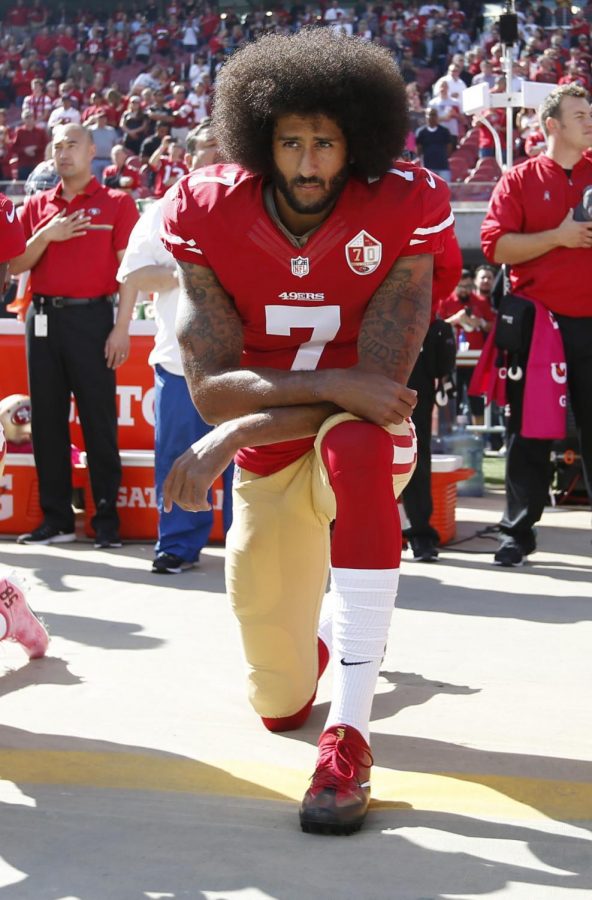
Colin Kaepernick kneeling in protest to police brutality.
President Biden’s clear goal for America is unity. He called for unity many times during his inaugural speech, and here’s how he advises Americans achieve this lofty goal:
“We can see each other not as adversaries but as neighbors. We can treat each other with dignity and respect. We can join forces, stop the shouting, and lower the temperature. For without unity, there is no peace, only bitterness and fury. No progress, only exhausting outrage. No nation, only a state of chaos. This is our historic moment of crisis and challenge, and unity is the path forward.”
At first, I was convinced. I day-dreamed plans for how I might work toward peaceful conversations over dinner with Republicans and even Trump supporters. I’ve had many fruitful conversations with conservatives in the past, and I was brainstorming how I might use these skills beyond Facebook debates. I was moved to action by Biden’s words.
Then I reflected on how this call for unity might sound to others, such as Colin Kaepernick, and I came to the conclusion that unity cannot be the goal, and empathy cannot be the means. Only justice can lead us forward. In today’s essay, I will focus on an argument for why I believe unity cannot be the goal. I’ll take up the justice path in a subsequent post.
“Unity cannot be the goal, and empathy cannot be the means. Only justice can lead us forward.”
Biden offers good advice to one portion of Americans: the Trump supporters who believe the election was stolen and who stormed the Capitol on January 6, 2021. Yes, I can see how peace, progress, and the state of the nation are threatened by Trumpism. I appreciate the command to “get in line.” But those folks were not listening to Biden’s speech, and if they happen to hear about it later, I promise it will not convince them to change their behaviors or modify the contents of their souls.
That’s because unity cannot be demanded. If part of America simply won’t listen to your calls for unity, then your calls will not unify them with the rest of the country.
The deeper reason unity cannot be demanded relates to the institutional power imbalances in America. The command to “be more unified” must always be directed at a collective that is already divided. The person commanding unity cannot force the collective into unification (though with enough power, they can certainly force the collective into behaviors that appear to be unified, typically at the expense of the oppressed). In forced unification, the oppressed assimilate to the will of the oppressor in what appears to be unification but, in reality, is more of the same old subjugation. Thus, demanding unity can only create the false appearance of unity, not actual unity.
Only those in power can demand “unity,” and they will only achieve assimilation. Only those with the privilege to make the rules can demand an “end to division,” and even then, any success will be at the expense of those without the power to refuse. Consider a few absurd scenarios of someone without power demanding unity from someone with power using Biden’s words from his inauguration speech.
Imagine the absurdity of a wife pleading with her abusive husband for a united front: “honey, it’s time for you to treat me as a partner rather than an enemy. I demand we treat each other with dignity and respect from now on. We must join forces, stop the shouting, and lower the temperature.” Here, too, the wife is offering some great advice to her abusive husband, and yes, if only he would do these things (and more), they may have a shot at repairing the relationship. This scenario is absurd because we know the world doesn’t work this way. The abused wife does not have the power to command her husband change his ways.
Imagine another absurd scenario in America: a Black man stating his case to the local police, “officer, surely we can see each other as neighbors not adversaries. I know that my outrage at the deaths of innocent Black men is exhausting to you, but we must treat each other with dignity and respect. If not, then there will be no peace—only chaos, only bitterness and fury. We must join forces, stop the shouting, and lower the temperature.” Amen. Absolutely. This is all true, and I am a huge fan of everything this hypothetical Black man says to the police officer. This scenario is also absurd because, again, we know the world doesn’t work this way.
Oppressed people cannot simply ask their oppressors to treat them with more respect and have their requests honored. That is part of what it means to be oppressed: your requests don’t matter. They have no force. They will not change a damn thing.
Here’s how the real world works. It’s the abusive husband who says to his wife, “why do you always have to be so combative? Can’t we just get along for once? Can’t we just go to one nice dinner without getting into a huge fight?” Translation: can’t you just always say and do exactly what I want you to say and do?
Or the police officer who says to the Black man, “if you weren’t so violent, I could trust you. If only you protested in these allowable ways, we wouldn’t have to bring the pepper spray and rubber bullets.” Translation: can’t you just always say and do exactly what I want you to say and do?
The reason the “helpful, unifying advice” only goes from abusive husband to wife and from police officer to Black man—and not vice versa—is because men and police officers have the power to dictate what women and Black men think, feel, and do. The opposite is simply not the case. Calls for unity can only made by those with the power to control what others do.
When the oppressed comply with the oppressor’s calls for “unity,” it is mere assimilation. It is survival. It is what they have to do, not what they want to do. That’s why true unity cannot be demanded because if it is demanded, it will be nothing but the appearance of unity.
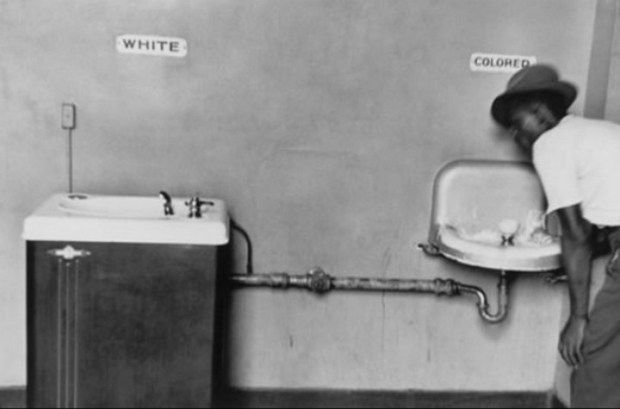
Even if the call to unity were possible for those without power, true peace cannot come from joining forces with the oppressor. Some rules (white-only lunch counters) are not worthy of respect, and disrupting the status quo is the only way to change them. Some things are worth shouting, (“Say her name!” “Breonna Taylor!”) even if the shouting and anger feels divisive to those in power. Yes, outrage is exhausting, but that does not make it any less of an appropriate response to the outrageous. A calm, polite, ordered, unified society is not thereby better than a chaotic one. We need “good trouble” to disrupt the false unity, which is mere assimilation, before we could ever grow true unity in it’s place.
Even if calls for true unity were possible, it would be morally wrong to ask the oppressed to:
Join forces with their oppressors
Show empathy/sympathy or compassion toward their oppressors
Walk a mile in their oppressor’s shoes
Forgive their oppressors
Stop being angry with or displaying hatred toward their oppressors
What kind of sadist would ask a slave to walk a mile in her master’s shoes “for the union”? It is a great harm to demand the powerless endure BOTH their own oppression and empathy towards those who oppress them. In addition to being morally wrong, such calls for empathy, too, can only come from those with power, such as the abusive husband and police officer. It’s the abusive husband who demands his wife understand how it feels to be him, and then diminishes all of her feelings. Police officers demand empathy for how life-threatening their jobs are–as if choosing a career is equivalent to being born Black in America–and then offer no empathy of their own.
Forced unification or requests for empathy, commanded by those who have the power, causes additional harm to the oppressed, and so unity should certainly not be our goal, and empathy should not be the path to unity.
If unity cannot nor should not be the goal, then what is?
A start to an answer is justice. Not a bloodthirst, retributivist justice as is doled out by the American Criminal Justice System. Rather, justice as fairness, as developed by philosopher John Rawls. More on that next time.
I want to share an argument with you. It’s not my argument, but it is an argument every American needs to consider right now. It is Michael Huemer’s argument that immigration restrictions are prima facie rights violations. That is, it’s wrong to use force to prevent someone from entering this country.
Huemer begins with the ethical question: is it morally right to forcibly prevent would-be immigrants from living in the United States? He argues that those excluded seem, on the face of it, to suffer a serious harm. Why are we justified in imposing this harm?
Huemer has a very important assumption from the outset. He argues we’re not worrying about international terrorists, criminals, or fugitives from the law. We have a right to exclude those people. The focus should be on ordinary people who are seeking a new home and a better life.
As for the President’s recent ban, he’s not simply excluding terrorists from coming to America. He’s banned anyone from a specific country for seemingly arbitrary reasons (unless you count his personal business interests, and then it doesn’t appear quite as arbitrary). He is excluding refugees fleeing from terrorists, and so Huemer’s argument that follows certainly applies.
The reason I’m sharing Huemer’s argument is because his method is absolutely genius. He first describes a case in which nearly everyone will share an intuitive evaluation of some action, and then draws a parallel from the case described to the more controversial case of immigration. If you’re absolutely convinced in the simple case, and you cannot undermine the analogy, then you ought to be convinced in the harder immigration case, too. (more…)
Over the past few weeks, I’ve given three arguments for redistributing wealth to shrink the gap between the rich and the poor. First, I argued that societies that redistribute more are seen as less corrupt. Second, I argued that vast inequalities do significant harm to individuals. More unequal societies have more poverty, more spending on the military, higher infant mortality rates, more people in prison, more homicides, greater substance abuse, and lower life satisfaction. Third, I argued that if we follow the widely popular “Golden Rule,” then we’ll see that a rational, self-interested person ought to ensure opportunities for the disadvantaged instead of being concerned about the well-being of those at the top.
I’ve now reached the last, great bastion of fiscal conservatism: libertarianism. The guiding principle behind libertarianism is the noninterference principle: one should be able to do as they please so long as they are not interfering with others, and one should be free from interference by others. The noninterference principle applies to property: one should be able to do as they please with their property so long as they are not interfering with others, and one should be free from others taking their property. You can see how fiscal conservatism easily follows: individuals have the right to do whatever they want with their money, and redistribution violates this right.
Robert Nozick appropriately applies this fiscal conservativism to taxes: “Taxation of earnings from labor is on a par with forced labor…taking the earnings of n hours labor is like taking n hours from the person; it is like forcing the person to work n hours for another’s purpose” (Anarchy, State, and Utopia). Redistribution is akin to the harms of slavery. (more…)
What sort of society should the rational person want?
Last time, I concluded that wealth inequality does significant harm to an individual’s life, liberty, and mental health, with no additional benefits. The bare existence of inequality within a society does great harm—more harm than poverty alone. This is the first reason I believe we have a moral imperative to alleviate such gross inequality.
The second reason we should alleviate the inequality rampant in our society stems from the Golden Rule: do unto others as you would have them do unto you. I don’t take the Golden Rule to be an actual rule; it doesn’t say explicitly “do not hit your sister” like other moral rules do. Rather, the Golden Rule is a sort of “master rule.” It tells you how to make decisions about what to do. (more…)
Welcome back! I’m continuing a series on income inequality. In part 1 of this series, I argued that the fiscal conservative stance is an ethical stance, not simply an economic one. I argued that it does more harm than good. That is, fiscal conservative policies hinder the wellbeing of persons. In this post, I’m going to use quite a bit of data with two purposes, (1) I want to simply show how different democratic countries stack up with respect to many social goods, and (2) I want to convince you that inequality does more harm than good. (more…)
In Part 1 of the series on income inequality, I argued that being a “fiscal conservative” is a moral stance. One of the principles of fiscal conservativism says that we ought to balance the budget by cutting spending rather than raising taxes. In fact, a fiscal conservative will hardly ever encourage raising taxes.
The main reason a conservative doesn’t want to raise taxes is because she is opposed to redistributing wealth. We ought not take money from the rich, and just hand it over to the poor. (more…)
Many people claim to be “socially liberal but fiscally conservative” as though it’s evidence of what good people they are. Look at me! I care about the individual rights of immigrants, women, blacks, and gays! I’m all for same-sex marriage! I’m pro-choice!
But then they also might vote conservatively for fiscal reasons. I find this to be inconsistent. Through a series of posts about international income inequality, I will make the case that being “fiscally conservative” is as much a moral stance as “socially liberal.” Economic policies are in the domain of ethics, and I will eventually conclude that being fiscally conservative is ethically worse than being fiscally liberal. (more…)
“I personally think talking about it all the time just makes the problem worse.”
Racism is a difficult thing to talk about. We like to think we’ve reached equality. We like to think that soon enough, all the old racists will die, and racism will disappear with them. The problem will solve itself if we just give it enough time.
Shame is also a difficult thing. Shame is an emotion that represents the failure to live up to an ego ideal. We think of ourselves as caring, smart, funny, talented, moral, attractive, as a good parent, sibling, friend. We don’t simply think of ourselves these ways; we deeply value such characteristics. These are our ego ideals. On occasion, these ideas we have about ourselves are challenged. When others challenge the ideas we have about ourselves, we lash out in anger. We become defensive. We deflect your criticism by pointing out your flaws. (more…)
Justin P. McBrayer recently argued in the New York Times that our children don’t think there are moral facts. Here’s what I take his argument to be:
Argument 1:
Premise 1: Common Core defines ‘fact’ as something that is true about a subject or something that can be tested or proven.
Premise 2: Common Core defines ‘opinion’ as what someone thinks, feels, or believes.
Premise 3: Common Core says all sentences are either facts or opinions.
Premise 5: Common Core labels all value judgments (any claim with good, bad, right, wrong, etc) as opinions, never as facts.
Conclusion: Common Core teaches that there are no moral facts.
Argument 2:
Premise 1: Common Core teaches that there are no moral facts.
Premise 2: The school teaches that students have certain responsibilities such as “do your own work.”
Premise 3: Premise 1 is inconsistent with premise 2.
Premise 4: Outside of school, if there is no truth of the matter about whether cheating is wrong, then we cannot hold cheaters accountable.
Premise 5: We do (and should) hold cheaters accountable.
Conclusion: Outside of school, there is a truth of the matter about whether cheating is wrong (i.e., there are moral facts).
Conclusion: We should reject the Common Core teaching that there are no moral facts.
I agree with most of McBrayer’s argument. It is a rather elegant one. But his argument has come under serious attack by Daniel Engber over at Slate. In what follows, I shall defend McBrayer’s argument against Engber’s attack. I think Engber has built an elaborate strawman, but when he takes him down, McBrayer’s argument still stands tall. (more…)





 Reason and Virtue